
About the Center for
Formative Psychology®
The Center for Formative Psychology® of Brazil
The Center for Formative Psychology® of Brazil It was founded in April 1995, with headquarters in Rio de Janeiro, by psychologist Leila Cohn, who wished to Formative Psychology® by Stanley Keleman, contributing to the education of Brazilian society.
Similar to the work proposal of Center for Energetic Studies em BerkeleyBased in California, the Center for Formative Psychology® of Brazil is an institute that offers educational programs in Formative Psychology®, also offering individual care and clinical supervision.
The Center's programming includes workshops, seminars, courses for professionals, training classes, therapeutic groups, consulting, and process management.
The programs are aimed at people interested in their personal and professional growth from the perspective of the formative process of the human journey.
Between 1988 and 1994, Leila resided in California, where she studied and worked with Stanley Keleman at the then Center for Energetic Studies, today Formative Psychology® InstituteIn 1991, Leila joined the professional group at CES
Em julho de 1995 Stanley Keleman veio ao Brasil pela primeira vez, quando proferiu palestras no Rio de Janeiro e em São Paulo e ministrou um workshop residencial em Itatiaia, Rio de Janeiro, apresentando-se assim pessoalmente à comunidade brasileira.
Stanley Keleman voltou ao Brasil várias vezes nos anos seguintes, até 2001, sempre realizando palestras e workshops. Por motivos pessoais, Keleman passou a limitar posteriormente suas viagens ao Brasil.
In 1997, Leila Cohn initiated the Center's first program focused on vocational education, in the form of theoretical seminars in Emotional AnatomyThis program became the basis for the formation of the first class of the Professional Course in Formative Psychology® in Brazil, which began in 1998. Since then, several classes have graduated every three years, and today the Center has a Continuous Flow Professional Course lasting three years. The teaching program for professionals consists of theoretical seminars, intensive workshops, formative practice classes, online case discussions, individual sessions, and dissertation guidance. In addition, we also have the Advanced Studies Professional Program, composed of professionals who have completed the fundamental course and continue to deepen their knowledge of formative thinking and work.
Between 1999 and 2005, several Formative Psychology® Forums were held annually, featuring presentations by members of the Center and special guests. Each Forum had a specific theme, and the topics covered issues relevant to daily life in contemporary society.
Beginning in 2006, Stanley Keleman became Honorary President and Coordinator of Teaching and Research at CPFB, which deepened the cooperation between Leila Cohn and Stanley Keleman in conducting the Professional Education Program in Formative Psychology® at CPFB.
In 2007, a commemorative publication (Festschrift) was organized in honor of Stanley Keleman's 75th birthday, and the Center's team participated in this publication with several articles. The Festschrift launch ceremony was on October 1, 2007, in California, and was attended by the international training community. Leila Cohn and four members of the Center's team were present at the event. Also in 2007, the USABP (United States Association for Body PsychotherapyThe journal dedicated its autumn issue to Stanley Keleman, featuring several articles from the international community. Leila Cohn published the article “Formative Psychology: an Evolutionary Path”.
In 2009, Stanley formed the International Professional Group For intensive studies in Formative Psychology®, composed of six members of the international community involved in the professional teaching of Formative Psychology®. The purpose of this project was to deepen knowledge in Formative Psychology® through intensive meetings with Stanley Keleman twice a year. Leila Cohn participated in this project until 2018, when Stanley Keleman passed away, and today coordinates the international meetings, which have become online and held monthly.
Starting in 2012, Leila Cohn and Stanley Keleman established an unprecedented collaboration, creating the project "Interviews with Stanley Keleman by Leila Cohn," which ran from 2012 to 2018. Eight interviews were conducted, resulting in three films currently available on Vimeo:"Living Through Our Aging," "Quantum Dynamics in Human Experience," and "Dreams: A Formative Vision." There are also several clips of the interviews available on YouTube. The purpose of the interviews was to capture Stanley Keleman live, speaking about his thoughts and work, with a view to leaving a legacy for future generations. Currently, Leila Cohn and Marilyn Haller are working on a co-production to create new films with previously unreleased material from the interviews.
During the interviews, Stanley mentioned that he would like to establish direct contact with the professional groups coordinated by Leila Cohn in Brazil, as a way to deepen his participation in the Center's professional program. For four years, online conversations were held between Keleman and the Center's professional groups, mediated by Leila Cohn.
Leila Cohn maintained constant contact with Stanley Keleman for 30 years, with whom she developed a deep personal friendship and a solid and fruitful professional partnership.
Leila also maintained regular contact with the professional community in the United States and Europe, contact that laid the foundation for a joint effort to keep alive the exchange of experiences and knowledge related to the teaching of formative thought and methods. This constant exchange also aims to contribute to the organization and development of an international formative community and to the enrichment of programs developed in Brazil.
In October 2018, Leila Cohn represented the CPFB to the international community at the memorial service honoring Stanley Keleman in Berkeley, California. On this occasion, she also met with colleagues from the professional group to plan future projects aimed at developing training programs.
Still in 2018, the autumn volume of International Body Psychotherapy Journal It was entirely dedicated to Stanley Keleman, and the CPFB was represented with several published articles authored by members of the professional group.
Today, the Center for Formative Psychology in Brazil has a team of six professionals who develop diverse projects within their areas of interest and research. This results in a rich diversity of programs and a robust possibility for deepening and growth through the exchange of experiences and knowledge.
The Center for Formative Psychology® aims to organize and expand training networks, both nationally and internationally, and to this end, it offers a program of courses and workshops whose structure can be adapted to the needs of interested groups.
Proposal
We have a program open to the public and a specific training program for professionals.
Our programs have a therapeutic-educational focus and include courses, workshops, thematic groups, and seminars.
Living the Everyday Life
Personal Growth
We understand the innate process of being born, growing, maturing, aging, and dying, destined for every individual, as being malleable and capable of being voluntarily influenced.
The formative work utilizes simple exercises aimed at reorganizing emotional attitudes and behaviors that hinder growth and the development of personality. The method works with voluntary micro-movements aimed at restructuring neuro-motor patterns and expanding the subject's influence over themselves.
The degree of involvement with one's own process and the commitment to taking ownership of it differentiates each individual's journey in their personal evolution.
Changing Habits
Are there any habits you'd like to change? How successful have you been in trying to change any of your habits?
We create and maintain habits throughout our lives. This gives us comfort and security, but it also traps us in fixed and obsolete behaviors.
The brain maps the body's actions. The more we repeat a behavior, the more it stabilizes, transforming into a habit. Our habits are maintained by stable connections between muscles and brain.
Somatic practice is a simple and efficient tool for altering experiences and behaviors by reshaping brain maps. This allows us to influence ingrained habits and lead a more fulfilling life.
Stress Management
How do you respond to different levels of pressure? And how do you deal with signs of stress such as anxiety, insomnia, depression, etc.?
Stress is a part of life. However, when intense or continuous, it generates disturbances in daily life, such as discouragement, difficulty concentrating, agitation, impulsivity, etc.
Formative Psychology® works with small exercises that stimulate new brain connections and make it possible to change behavior in stressful situations.
Compulsiveness
Compulsive behavior involves the repetition of a specific action. Compulsion is uncomfortable because it generates the experience of a lack of self-control. It is frustrating for a person to plan not to repeat an unwanted behavior and be unable to restrain themselves.
From a neurophysiological point of view, the more a behavior is repeated, the stronger the brain connections that maintain it become, thus increasing its durability. The maintenance of compulsive behavior occurs through the stabilization, by repetition, of the corresponding neuro-motor circuits.
The formative method works with micro-movements to access and influence neural connections through the voluntary differentiation of new action patterns. It is possible to intervene in the muscular posture of compulsive behavior and create alternative actions, also establishing new brain connections. The formative work aims to broaden a person's range of possibilities, offering them tools to reorganize their emotional experience, their thinking, and their behavior.
Sexuality
It is one of the essential aspects of human existence. Understanding it, from a formative perspective, means recognizing it as an organizing pulse of intimacy that involves patterns of giving and receiving warmth, tenderness, and vitality. Through formative methodology, we can modulate gradations of proximity/distance and organize an intimate-personal body.
"LINK"
Affective and sexual bonds are part of human history. Uniting in pairs involves seeking and drawing the other closer in order to share something. This pulse of proximity/distance creates a dance of bodies, sometimes near, sometimes far. Two bodies with their own histories and realities meet to create a new story. Therefore, the experience of bonding is essential for personal growth, as it fulfills an innate human desire to establish contact and connection with another.
Relational patterns signify attitudes that express a particular style of relating to oneself and to others, and through formative work, it is possible to modulate the step-by-step process of a romantic encounter.
Anxiety
Anxiety is a state of heightened arousal in human behavior in response to situations that generate expectations, whether pleasurable or not. The state of anxiety has a self-preservative and adaptive function; it is a warning signal, with varying levels of duration and intensity. Continuous persistence in this state of alert causes discomfort and harm to the physiological and emotional systems.
The formative practice, with voluntary micro-movements, makes it possible to regulate anxiety levels, promoting a greater capacity for self-management.
Depression and Panic
Depression constitutes an experience of sub-excitability, and panic a situation of excessive excitability. Panic and depression are mutually related, like a continuum. On one side, there is the sub-vitality of extreme depression; on the other, extreme and overwhelming panic; between them, various degrees of each. All these degrees, as well as the two extremes, constitute bodily postures, somatic-emotional forms.
The practice of somatic exercises works efficiently with these body postures and their connections in the brain, helping to alter levels of depression and panic, and the emotional experience.
Couple and Family
Couple
Growth in a couple's relationship occurs through the organization and deepening of forms of interpersonal and intrapersonal intimacy.
The term "couple" refers to the union of two embodied individuals forming a bond based on the experience of three organizing elements: a shared life project, wanting the best for the other (embodying attitudes of caring, being concerned, sharing, and cooperating), and experiencing sexuality as an exchange of warmth, affection, and vitality.
The formative method works with emotional attitudes in couple interaction, aiming to organize a cooperative and loving partnership. This involves managing crises and transitions inherent in personal and marital growth.
Family
The family can be understood as a collective body, a fertile ground where adult ways of existing are generated and sustained.
It is within the family that people learn to develop their individuality and to live with others, forming themselves as adult and social beings. It is within the family that we learn to express affection, to generate and contain our excitability, to establish boundaries, to exercise our autonomy, to embody loving and cooperative attitudes, in short, to develop our subjectivity.
The somatic-emotional method can be used in family work to reorganize patterns of closeness and distance, of giving and receiving, and of behaviors that hinder the growth of its members.
Management Team

Ártemis Marinho - CRESS 3599
Artemis Marinho – Social Worker – Professor at the School of Social Work, Federal Fluminense University (UFF). Somatic therapist. PhD in Social Work (UERJ) and Master's in Social Work (PUC/RJ). Associate Professional Member of the Center for Formative Psychology® of Brazil. Professional training with Leila Cohn; participation in her workshops and those conducted by Stanley Keleman, in Brazil and at the Center for Energetic Studies, Berkeley, California.
LEARN MORE
Member of the Brazilian Society of Geriatrics and Gerontology. Coordinates educational-therapeutic groups with an emphasis on gender and aging issues. Also develops studies and research on these topics.
Email: artemismarinho@gmail.com
Phone: (21) 99942-7828

Educyra Assef Vaney - CRP 05/15890
A professional member of the Center for Formative Psychology® of Brazil since its foundation, participating in workshops with Stanley Keleman in Brazil and the United States. Interested in topics such as life in the body and its emotional implications, she participated in the editing of the magazine "Rádice" in the 1980s, as well as its workshops "Alternatives in the Psi Space," working with Roberto Freire, José Angelo Gayarsa, among others.
LEARN MORE
She trained in Biosynthesis with David Boadela and Ester Frankel, studied Enneagram for 6 years with Christian Ptterham, adopting Formative Psychology as her line of work (1995 – present). She holds a postgraduate degree in Applied Neuroscience from UFRJ (2010 – 2012).
It promotes groups and workshops with young people aimed at preparing them for adult life, with women using the archetypes of Greco-Roman goddesses as an aid to their formative work, and also groups for pregnant women aimed at providing support for new mothers.
E-mail: educyravaney@gmail.com
Site: www.educyravaney.com.br
Tel: 21 2287-0094
Cel: 21 98962-8530

Iracema Teixeira (in memoriam 1960 - 2025) - CRP 06/157235
Iracema Teixeira – Psychologist (CRP 06/157235). PhD in Psychology, specializing in relationships (2009/UFRJ). Master's degree in Clinical Sexology (1998/UGF). President of the Brazilian Society for Studies in Human Sexuality – SBRASH, 2014-2015 term. Professional member and teacher at the Center for Formative Psychology®️ of Brazil. Participated in workshops by Stanley Keleman, held in Brazil and at the Center for Energetic Studies in Berkeley, California.
LEARN MORE
She participated in the first class of Professional Training in Formative Psychology® (1998/2003) and currently belongs to the Advanced Studies Group (since 2003), both coordinated by Leila Cohn. She participated in workshops by Stanley Keleman, held in Brazil and at the Center for Energetic Studies, in Berkeley/California.
Associate Professional Member of the Center for Formative Psychology® since 2000. Has experience in other psychotherapeutic approaches (CBT, Gestalt, and Transpersonal Psychology), having developed an integrative vision within formative thinking.
Director of the Dialogue Space.
Creator of the first digital course on Theories of LOVE.
Lecturer in training and postgraduate courses. Clinical supervisor and thesis advisor. International Certification in Positive Psychology Coaching (Positive Acorn – USA).
President of the Brazilian Society for Studies in Human Sexuality – SBRASH, 2014-2015 term.
Speaker. Consultant for national magazines. Contributor to Rádio Globo.
55 21 98119-6462 / 55 11 97093-1503
Website: www.iracemateixeira.com.br
Emails: iracema@psicologiaformativa.com.br | iracema@iracemateixeira.com.br

Leila Cohn - CRP 05/8164 - Founding Director and Coordinator of the Formative Education Program
Leila Cohn is a psychologist (CRP-05/8164) and holds a master's degree in East-West Psychology from the California Institute of Integral Studies, SF-CA. She completed training in Formative Psychology® with Stanley Keleman at the Center for Energetic Studies in Berkeley, California (1988-1994), and maintained a regular Advanced Studies program in Formative Psychology® with Keleman until his passing in 2018.
LEARN MORE

Sônia Andrade - CRP 05/30010
Psychologist, somatic psychotherapist, dance artist. Economist (UERJ), Master's student in Philosophy (UGF). Associate Professional Member of the Center for Formative Psychology® of Brazil, since 2000, with professional training by Leila Cohn. Participates in workshops and professional groups coordinated by Stanley Keleman at the Center for Energetics Studies in Berkeley, California-USA. Instructor at the Rio Aberto Institute, Center for Psycho-corporal Therapies and Human Development, Buenos Aires-Argentina, since 1994.
LEARN MORE
Studies and training in the Psychology of Enneagram Types, based on an understanding of the Enneagram, with Claudio Naranjo, SAT School, since 1997. Maintains a clinical practice with adolescents and adults. Coordinates educational-clinical thematic groups and study groups. Consultant in projects directed to the clinical, educational and organizational areas. Clinical coordinator and supervisor.
E-mail: soniaandradebarros@hotmail.com
Phone: (21) 2255 – 4545 / (21) 97208-5484

Sonia de Menezes - CRP 05/16506
Psychologist. – Professional Training in Formative Psychology® with Leila Cohn. – Participation in Stanley Keleman's workshops in Brazil and at the Center for Energetic Studies in Berkeley, CA. – Professional Associate Member of the Center for Formative Psychology® of Brazil since 2005.
LEARN MORE
– Postgraduate degree in Applied Neuroscience from UFRJ (2010-2012).
– Personal & Professional Coach certified by the Brazilian Coaching Society.
– Businesswoman with experience in People and Business Management.
Currently, she is developing a work project focused on Formative Coaching.
Phone: 55 21 99985-6799

Stanley Keleman (in memoriam) - Honorary President and Coordinator of Teaching and Research
Leila Cohn is a psychologist (CRP-05/8164) and holds a master's degree in East-West Psychology from the California Institute of Integral Studies, SF-CA. She completed training in Formative Psychology® with Stanley Keleman at the Center for Energetic Studies in Berkeley, California (1988-1994), and maintained a regular Advanced Studies program in Formative Psychology® with Keleman until his passing in 2018.
Customer Service Team

Ártemis Marinho - CRESS 3599
Artemis Marinho – Social Worker – Professor at the School of Social Work, Federal Fluminense University (UFF). Somatic therapist. PhD in Social Work (UERJ) and Master's in Social Work (PUC/RJ). Associate Professional Member of the Center for Formative Psychology® of Brazil. Professional training with Leila Cohn; participation in her workshops and those conducted by Stanley Keleman, in Brazil and at the Center for Energetic Studies, Berkeley, California.
LEARN MORE
Member of the Brazilian Society of Geriatrics and Gerontology. Coordinates educational-therapeutic groups with an emphasis on gender and aging issues. Also develops studies and research on these topics.
Email: artemismarinho@gmail.com
Phone: (21) 99942-7828

Denise Passos
Founder of Diálogos Formativos, a research and training center focused on the applications of Formative Psychology (R) in relation to approaches in Somatic Education, movement practices, manual therapies, art, theater, and dance. Creator and facilitator of the Methodology of Formative Workshops, a group approach from a Social Psychology and Psychodrama perspective interacting with Formative Psychology (R).
LEARN MORE
Co-creator and co-coordinator of the Psychology and Sensitive Anatomy Course in the BMM- Body Mind Movement training program, with Mariana Camarote and Soraya Jorge. She coordinated, through the Formative Dialogues program with the Brazilian Psychology Center, directed by Leila Cohn, the First Latin American Symposium on Formative Psychology (R) in 2023.

Educyra Assef Vaney - CRP 05/15890
A professional member of the Center for Formative Psychology® of Brazil since its foundation, participating in workshops with Stanley Keleman in Brazil and the United States. Interested in topics such as life in the body and its emotional implications, she participated in the editing of the magazine "Rádice" in the 1980s, as well as its workshops "Alternatives in the Psi Space," working with Roberto Freire, José Angelo Gayarsa, among others.
LEARN MORE
She trained in Biosynthesis with David Boadela and Ester Frankel, studied Enneagram for 6 years with Christian Ptterham, adopting Formative Psychology as her line of work (1995 – present). She holds a postgraduate degree in Applied Neuroscience from UFRJ (2010 – 2012).
It promotes groups and workshops with young people aimed at preparing them for adult life, with women using the archetypes of Greco-Roman goddesses as an aid to their formative work, and also groups for pregnant women aimed at providing support for new mothers.
E-mail: educyravaney@gmail.com
Site: www.educyravaney.com.br
Tel: 21 2287-0094
Cel: 21 98962-8530

Izilda Cristina M. Cordeiro - CRP 06/33184
Psychologist (CRP: 06/33184-7). Member of the Professional Team and the Advanced Professional Group of the Brazilian Psychology Center. Coordinated the Crisis Care project carried out during the COVID-19 pandemic in 2020 and is part of the Care team of the Tecendo Formas project by the Brazilian Center for Formative Psychology. Participated in Stanley Keleman's workshops held in Brazil. Has maintained a clinical practice as a Formative Psychotherapist since 1995.
LEARN MORE
She developed studies on Systemic Thinking and Family Therapy at CLIFAN – SP (2004 to 2011). She specialized in early childhood education, working with adolescents in situations of social vulnerability, and women victims of domestic violence. In daycare centers and shelters, she worked in management, coordination, consulting, and taught courses and workshops (1987 – 2004).
Contact: (55 11) 993920303
E-mail: izilda.cordeiroo@gmail.com

Leila Cohn - CRP 05/8164 - Founding Director and Coordinator of the Formative Education Program
Leila Cohn is a psychologist (CRP-05/8164) and holds a master's degree in East-West Psychology from the California Institute of Integral Studies, SF-CA. She completed training in Formative Psychology® with Stanley Keleman at the Center for Energetic Studies in Berkeley, California (1988-1994), and maintained a regular Advanced Studies program in Formative Psychology® with Keleman until his passing in 2018.
LEARN MORE
Member of Formative Psychology®® A member of the Professional Team since 1992 and the recently formed International Intensive Studies Group with S. Keleman since 2009. Founding director of the Center for Formative Psychology of Brazil in Rio de Janeiro, she currently maintains a clinical practice as a formative psychotherapist, clinical supervisor, and coordinator of the Professional Education Program. She publishes articles nationally and internationally.
Contact: (55 21) 2239-4375 | (55 21) 2512-0590
E-mails: leilacohn@psicologiaformativa.com.br | leilacohn@gmail.com

Sônia Andrade - CRP 05/30010
Psychologist, somatic psychotherapist, dance artist. Economist (UERJ), Master's student in Philosophy (UGF). Associate Professional Member of the Center for Formative Psychology® of Brazil, since 2000, with professional training by Leila Cohn. Participates in workshops and professional groups coordinated by Stanley Keleman at the Center for Energetics Studies in Berkeley, California-USA. Instructor at the Rio Aberto Institute, Center for Psycho-corporal Therapies and Human Development, Buenos Aires-Argentina, since 1994.
LEARN MORE
Studies and training in the Psychology of Enneagram Types, based on an understanding of the Enneagram, with Claudio Naranjo, SAT School, since 1997. Maintains a clinical practice with adolescents and adults. Coordinates educational-clinical thematic groups and study groups. Consultant in projects directed to the clinical, educational and organizational areas. Clinical coordinator and supervisor.
Emails: soniaandradebarros@hotmail.com
Phone: (21) 2255–4545 / (21) 97208-5484

Julia Landgraf Pupo - CRP 06/97776
Psychologist with over fifteen years of experience in public policy in the areas of Health and Social Assistance; Specialized in Psychopathology and Public Health from the Faculty of Public Health/USP; Member of the Advisory Board of the É de Lei Community Center;
LEARN MORE
Member of the advanced professional group and coordinator of the projects: Weaving Forms and Formative Encounters, by the Center for Formative Psychology® of Brazil.
Clinical psychotherapist who sees adults, young people, adolescents, and the elderly. Provides clinical and institutional supervision.
Contact 11 99858-1502
E-mail:julpupo@gmail.com

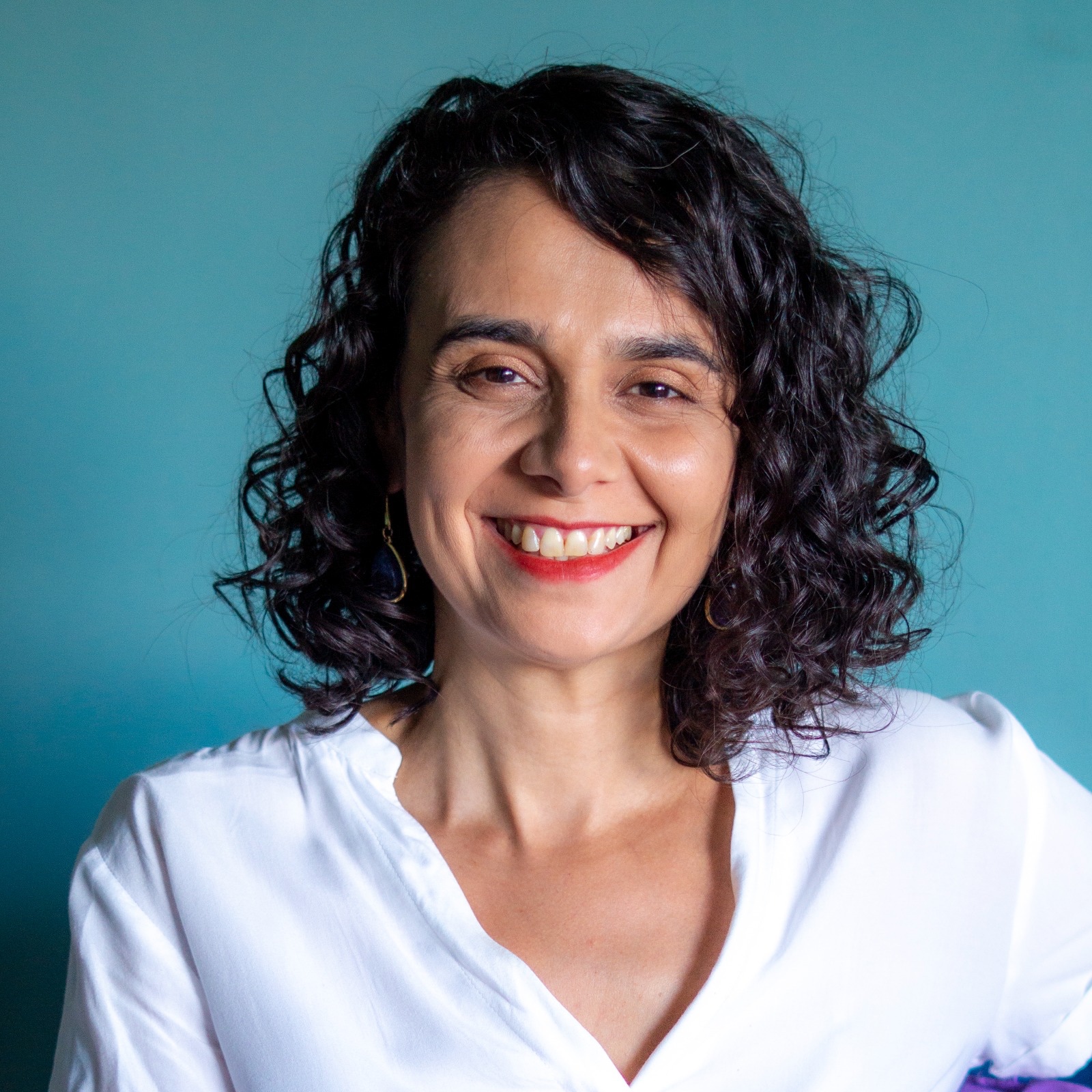
Paula Sizenando - CRP 12/21701
Psicóloga pela PUC-SP, mantém uma prática clínica como psicoterapeuta formativa desde 2013, atendendo jovens, adultos e conduzindo grupos.
Membro da equipe de atendimento e do Grupo Profissional Avançado do Centro de Psicologia Formativa® do Brasil, onde também coordena o Grupo de Estudos em Psicologa Formativa® e os projetos Tecendo Formas e Encontros Formativos.
Em 2013, participou de workshop presencial com Stanley Keleman em Berkeley, Califórnia.
Criadora da oficina Mitos Pessoais, que integra Psicologia Formativa,SoulCollage® e movimento somático.
LEARN MORE
Estuda e pratica a Psicologia Formativa desde 2008. Atuou como pesquisadora e colaboradora do Diálogos Formativos entre 2010 e 2020. Desde 2020, faz parte do Centro de Psicologia Formativa® do Brasil.
Contact: 55 48 99187-0955
E-mail: paulasizenando@gmail.com

Lívia P. Braga - CRP 06/145882
Psicóloga formada pela Universidade Estadual Paulista (UNESP), atua na clínica como psicoterapeuta formativa, acompanhando crianças, adolescentes e adultos. Desenvolve também um trabalho clínico dedicado às questões da parentalidade e às relações entre pais e filhos, bem como projetos em parceria com instituições escolares.
É membro do Grupo Profissional Avançado do Centro de Psicologia Formativa® do Brasil e dedica-se ao estudo e à pesquisa da Psicologia Formativa e de suas aplicações na prática clínica com crianças, adolescentes e adultos.
LEARN MORE
Sua formação inclui estudos em psicanálise, com especial interesse pela obra de D. W. Winnicott.
Contact: +55 (11) 95232-4341
E-mail: liviabraga04@gmail.com
Work teams
Coordination Weaving Forms

Izilda Cristina M. Cordeiro - CRP 06/33184
Psychologist (CRP: 06/33184-7). Member of the Professional Team and the Advanced Professional Group of the Brazilian Psychology Center. Coordinated the Crisis Care project carried out during the COVID-19 pandemic in 2020 and is part of the Care team of the Tecendo Formas project by the Brazilian Center for Formative Psychology. Participated in Stanley Keleman's workshops held in Brazil. Has maintained a clinical practice as a Formative Psychotherapist since 1995.
LEARN MORE
She developed studies on Systemic Thinking and Family Therapy at CLIFAN – SP (2004 to 2011). She specialized in early childhood education, working with adolescents in situations of social vulnerability, and women victims of domestic violence. In daycare centers and shelters, she worked in management, coordination, consulting, and taught courses and workshops (1987 – 2004).
Contact: (55 11) 993920303
E-mail: izilda.cordeiroo@gmail.com

Julia Landgraf Pupo - CRP 06/97776
Psychologist with over fifteen years of experience in public policy in the areas of Health and Social Assistance; Specialized in Psychopathology and Public Health from the Faculty of Public Health/USP; Member of the Advisory Board of the É de Lei Community Center;
LEARN MORE
Member of the advanced professional group and coordinator of the projects: Weaving Forms and Formative Encounters, by the Center for Formative Psychology® of Brazil.
Clinical psychotherapist who sees adults, young people, adolescents, and the elderly. Provides clinical and institutional supervision.
Contact 11 99858-1502
E-mail:julpupo@gmail.com

Paula Sizenando - CRP 12/21701
Psicóloga pela PUC-SP, mantém uma prática clínica como psicoterapeuta formativa desde 2013, atendendo jovens, adultos e conduzindo grupos.
Membro da equipe de atendimento e do Grupo Profissional Avançado do Centro de Psicologia Formativa® do Brasil, onde também coordena o Grupo de Estudos em Psicologa Formativa® e os projetos Tecendo Formas e Encontros Formativos.
Em 2013, participou de workshop presencial com Stanley Keleman em Berkeley, Califórnia.
Criadora da oficina Mitos Pessoais, que integra Psicologia Formativa,SoulCollage® e movimento somático.
LEARN MORE
Sua investigação sobre a vida no corpo teve início nas Artes Cênicas, onde explorou o corpo como meio de expressão, com especial interesse por Butoh, Teatro-dança e Teatro Físico.
Estuda e pratica a Psicologia Formativa desde 2008. Atuou como pesquisadora e colaboradora do Diálogos Formativos entre 2010 e 2020. Desde 2020, faz parte do Centro de Psicologia Formativa® do Brasil.
Contact: 55 48 99187-0955
E-mail: paulasizenando@gmail.com
Coordination of Training Meetings
The meetings are spaces for exchange in which members of the professional groups of the Center for Formative Psychology in Brazil share how they apply the theoretical and methodological foundations of Formative Psychology in their professional practices.

Julia Landgraf Pupo - CRP 06/97776
Psychologist with over fifteen years of experience in public policy in the areas of Health and Social Assistance; Specialized in Psychopathology and Public Health from the Faculty of Public Health/USP; Member of the Advisory Board of the É de Lei Community Center;
LEARN MORE
Member of the advanced professional group and coordinator of the projects: Weaving Forms and Formative Encounters, by the Center for Formative Psychology® of Brazil.
Clinical psychotherapist who sees adults, young people, adolescents, and the elderly. Provides clinical and institutional supervision.

Paula Sizenando - CRP 12/21701
Psicóloga pela PUC-SP, mantém uma prática clínica como psicoterapeuta formativa desde 2013, atendendo jovens, adultos e conduzindo grupos.
Membro da equipe de atendimento e do Grupo Profissional Avançado do Centro de Psicologia Formativa® do Brasil, onde também coordena o Grupo de Estudos em Psicologa Formativa® e os projetos Tecendo Formas e Encontros Formativos.
Em 2013, participou de workshop presencial com Stanley Keleman em Berkeley, Califórnia.
Criadora da oficina Mitos Pessoais, que integra Psicologia Formativa,SoulCollage® e movimento somático.
LEARN MORE
Estuda e pratica a Psicologia Formativa desde 2008. Atuou como pesquisadora e colaboradora do Diálogos Formativos entre 2010 e 2020. Desde 2020, faz parte do Centro de Psicologia Formativa® do Brasil.
Contact: 55 48 99187-0955
E-mail: paulasizenando@gmail.com
Vídeos e Arquivos
Philipe Lacerda
Training Work
developed at the Center
The Center for Formative Psychology® of Brazil develops formative work through processes.
Educational services, professional supervision, individual support, and consulting for the corporate market
Formative Practice Classes
The classes consist of practicing somatic exercises using the Formative Methodology developed by Stanley Keleman. The somatic-emotional method works with voluntary micro-movements and the reorganization of emotional attitudes and brain maps. The classes are educational and aim to develop your capacity for self-influence through the establishment of new somatic-emotional-cortical connections.
Groups and Workshops
The classes consist of practicing somatic exercises using the Formative Methodology developed by Stanley Keleman. The somatic-emotional method works with voluntary micro-movements and the reorganization of emotional attitudes and brain maps. The classes are educational and aim to develop your capacity for self-influence through the establishment of new somatic-emotional-cortical connections.
Professional Courses
We offer two Professional Training Programs in Formative Psychology®️. The first covers the fundamentals of Formative Psychology®️, in a 3-year program that takes place in Continuous FlowThe second one is.. Advanced Professional Course Aimed at deepening the knowledge of those who have already completed basic education. The knowledge is applicable to the fields of psychology, general health, education, physiotherapy, speech therapy, body therapies, human resource management in organizations, coaching, and performing arts.
Professional supervision
These professional supervision sessions take place within the theoretical and methodological framework of Formative Psychology®️, and aim to educate professionals in understanding this approach, guiding them to think and work formatively. The work of Formative Psychology®️ is applicable to the fields of psychology, health in general, education, physiotherapy, speech therapy, body therapies, people management in organizations, coaching, and performing arts.
Individual care
Formative thought is based on the philosophical principles of phenomenology, understanding the human being as a process that is continuously constructed through experience. The human body is seen as a subjective process, a living phenomenon that pulsates and forms itself. Bodily process and subjective experience are a continuum, part of the same reality.
We exist simultaneously in a biological body and in a personally formed body. The human journey encompasses the development of the various forms that appear from childhood to adolescence and then in the various phases of adult life, and their respective subjective experiences. The innate process of being born, growing, maturing, aging, and dying, destined for every individual, is understood by formative theory as being malleable and capable of being voluntarily influenced.
The degree of personal involvement with the process itself and the commitment to taking ownership of it differentiates each individual's journey.
Keleman's clinical philosophy is based on an educational-therapeutic process that reorganizes inherited and learned somatic-emotional patterns. Using the formative method, the therapist works in partnership with the client to deepen self-knowledge and generate new possibilities for self-development. The formative approach does not aim to fix something or heal past damage, but to facilitate the reorganization of emotional attitudes and behaviors that hinder growth. The method works with the restructuring of neuro-motor forms and the consequent expansion of the subject's influence over their emotional reality and their personal development process.
Consultancy
Organizations have undertaken intense efforts to withstand market pressures and economic fluctuations; in this context, the modern worker is subjected to significant strain, whether from long working hours, the stress of daily urban life, or the demands for specialization and job insecurity. We also observe, as part of the organizational landscape, that the most prevalent risk factors among workers are sedentary lifestyles, obesity, stress, and high cholesterol levels, and that cardiovascular diseases are the second leading cause of death.
Keleman states that muscular postures also influence a way of thinking, feeling, and acting. An alteration in a person's somatic-emotional structure generates changes in their lifestyle, making it possible for each individual to influence the social environment in which they are embedded.
In line with this approach, we offer consulting services to companies whose culture includes thinking about and reflecting on quality of work, humanizing the environment, and improving the health and well-being of employees. Our objectives include offering these organizations a proposal for reflection and somatic-emotional re-education aimed at reorganizing ways of living and working, as well as creating a creative and inspiring environment for new production and relationship strategies that point towards building their own operational ethics focused on building personal and collective health and well-being.
Membership
Shortly.